Case study

From founding hire to department supervisor, ending in a satellite-office launch in India.

Five years at Gener8. Three progressive roles building, scaling, and operating a compositing department, then deploying on-site to stand up the training infrastructure for a 50-to-200+ scale-up in India.

5 years
Three progressive roles
founding hire to supervisor
65
Direct reports
at Vancouver peak
50 → 200+
India scale-up
in 7 weeks
7 weeks
On-site in India
leading the launch
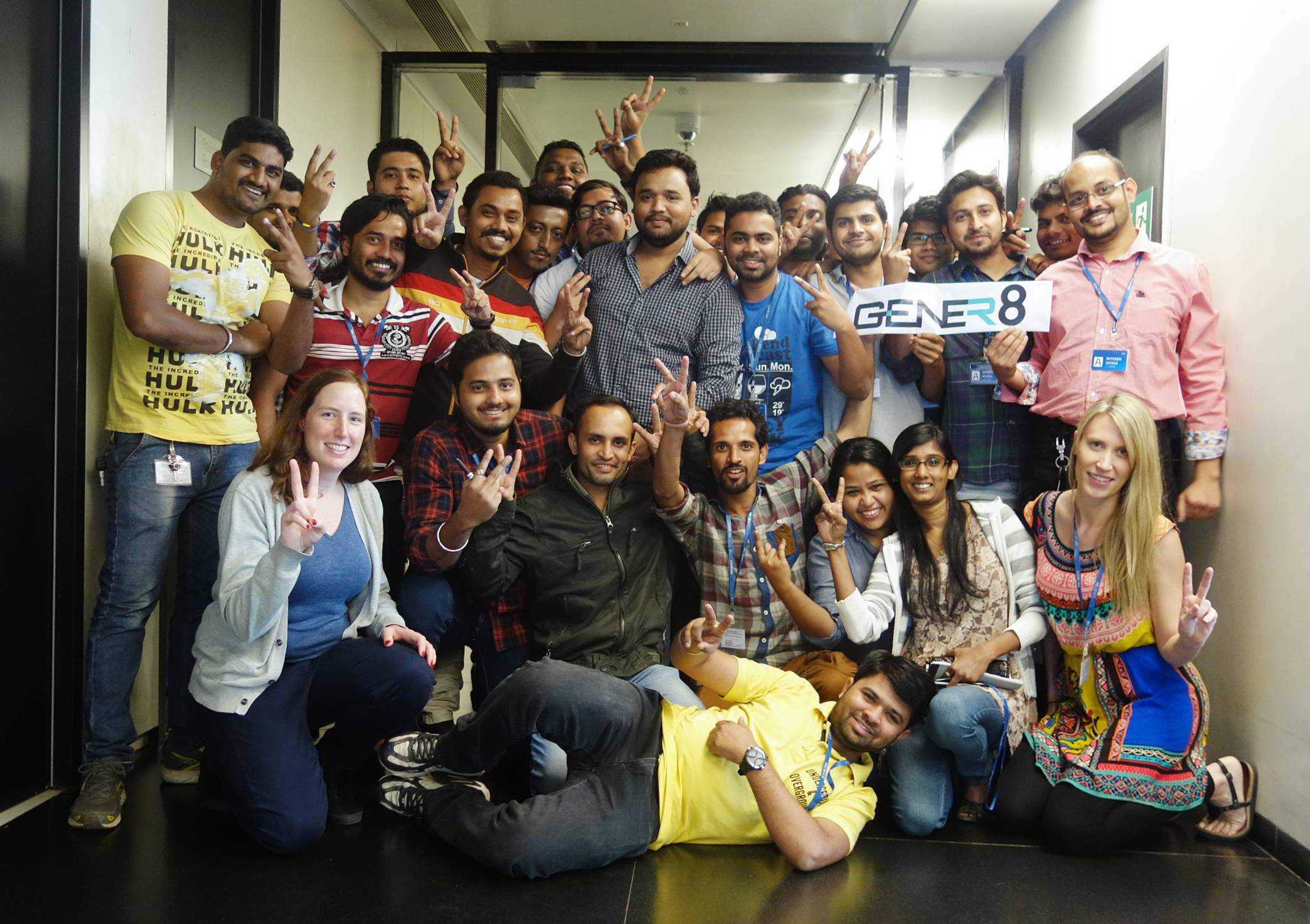
Gener8 Digital Media India office team, June 2015. 200+ artists on the production floor.

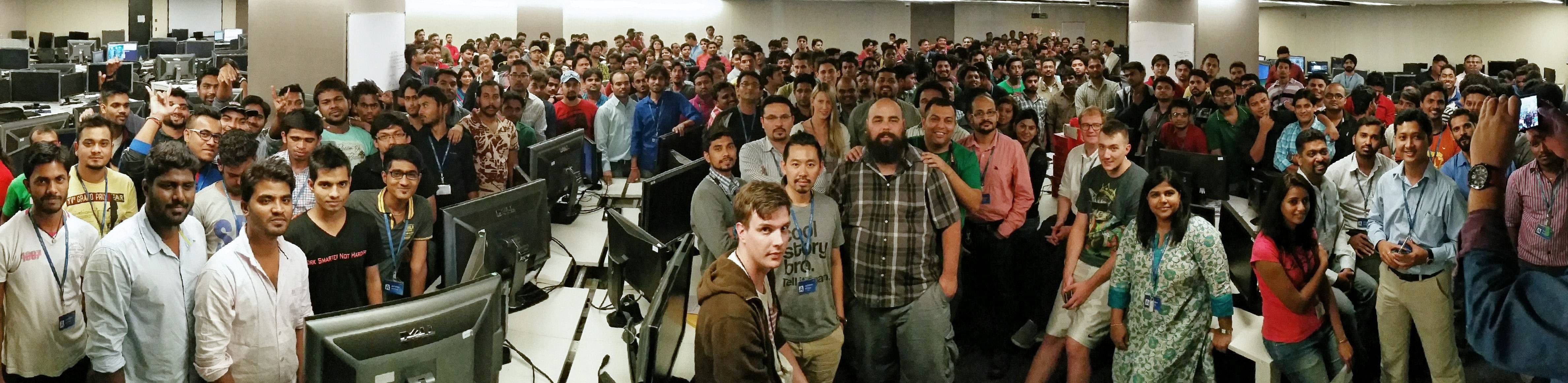
Gener8 India production floor. June 2015. In-camera panoramic stitch.

Origin of the leadership pattern

Gener8 was the first time I did this work as a leader.

The teaching craft was already there from years of adult education and published courses. Gener8 was where the craft became leadership: build training and operational infrastructure from inside a production environment, lead the change as the studio scales, hold the operating standard while the work is already running.

The pattern carried forward into Centre for Entertainment Arts and Think Tank Training Centre. Same operating model, different pressure. CEA and Think Tank prepared learners to enter production. Gener8 was production.

Summary

First hire in the compositing department at Gener8 Vancouver. Over five years and three roles, I scaled the department from one to 65, then deployed on-site to lead the training stand-up for the India satellite office.

This was not L&D adjacent to production. This was L&D inside production. The artists I trained were already on shows. The standard I built had to hold while the work was already running.

Three progressive roles, one operating throughline. The training muscle and operational discipline I built here became the model I'd run later at Centre for Entertainment Arts and Think Tank.

The Brief

Build out the compositing department at Gener8 Vancouver from a single founding hire. Scale it operationally and culturally, developing the workflows, training, and vendor systems that let the function keep pace with the studio's growth. Then deploy to India to stand up training and onboarding for a rapidly scaling satellite office: artists hired against active shows, capability ramping faster than headcount, no margin for delivery delay.

Act One: Foundation
Lead (Compositing)
Department founding, internal team build

Build the compositing department, the workflows, and the team standard from zero.

First hire in the compositing department at Gener8 Vancouver. No team, no workflows, no template. The studio was growing, and compositing capability had to be built before it was needed.

I built the operating system: compositing workflows from the ground up (start to client delivery), quality check and feedback mechanisms, and department daily stand-ups. Asset tracking was a leadership team effort, designed in partnership with Dev and Engineering.

As the team grew, I also took on the people-leadership work: hiring, performance reviews, PIPs, raises, and promotions across the department. At department height, the function ran with six leads reporting in. Training was built into the operational role, not separate from it.

  • Department buildWorkflows (start to client delivery), quality check and feedback mechanisms, daily stand-ups, training pipeline and materials for incoming artists.
  • Cross-functionalPartnered with Dev and Engineering on asset tracking architecture and project process.
  • People leadershipDepartment hiring, performance management, PIPs, raises, and promotion decisions. Six leads at department height.

The training function and the operational function were the same function. I built both because the department needed both.

Act Two: Extension
Supervisor (Compositing)
Outsource vendor operations, workflow standardization

Extend the department through outsource partners, under one delivery standard.

As the volume of work grew faster than internal headcount could absorb, the department had to extend. Outsource vendors became part of the delivery system, and the operational model had to expand with them.

I built the workflow infrastructure for external vendors: QC standards, performance metrics, export pipelines, and clean feedback loops. At peak, 15 vendors ran in concurrent evaluation, 15 to 40 artists each, with vendor testing as its own tracked system running alongside active production.

This was not just delegation. It was building a system where the internal team and the external partners operated under the same standard, with the same expectations, and the same accountability.

  • Vendor evaluationUp to 15 outsource vendors in concurrent evaluation. Average team size: 15–40 artists per vendor. Built tracking and QC infrastructure parallel to production systems.
  • QC & metricsEstablished measurement framework and quality standards for vendor deliverables.
  • Feedback loopsBuilt the operational system for getting vendor work back into the internal pipeline cleanly.

Multi-vendor coordination is a different competency than internal team leadership. I learned it here, and ran it again at CEA and Think Tank.

Act Three: Change & India
Department Supervisor (Compositing)
Executive leadership, change management, India satellite launch

Less on the box. More executive decisions, change management, and the India stand-up.

The role shifted in Act Three. Less hands-on compositing, more executive and administrative work: department-level decisions, the lead-up to a satellite launch in India, and operational continuity through ownership change.

Just before the India deployment, Gener8 was acquired by Prime Focus. My reporting structure and the Vancouver team's reporting structure stayed steady. Operational continuity ran from below while the corporate change happened above.

Then I flew to Mumbai. The studio needed to go from a small starting team to 200+ artists on active production work in 7 weeks. The training and onboarding infrastructure did not yet exist there.

I deployed on-site for 7 weeks to stand it up: the department training pipeline, new department leads onboarded, and the operational standards Vancouver expected. I also interviewed and hired artists across all departments, not just my own, with the India leads reporting to me through the launch window.

Compositing and paint training cohort at Gener8 India, Week 3, 2015.

Compositing and paint training cohort. Week 3 milestone. Gener8 India, 2015.

Capability had to ramp faster than headcount, with staff hired against active shows rather than ahead of them. And it had to lead across language, two time zones a half-day apart, and a team adjusting to a new corporate parent. The pipeline had to translate, not just transfer.

  • India launch7 weeks on-site. Stood up training and onboarding infrastructure from zero.
  • Scale delivered50 → 200+ artists on the production floor within the 7-week window.
  • Operational continuityHeld the team and the systems steady through acquisition and geographic expansion. Reporting structures stayed steady.
  • Cross-cultural leadershipBuilt communication norms and operational alignment across Vancouver and Mumbai, across a 12-hour time difference, language, and a moment of corporate change.

Training is upstream of change management. When you build capability, you earn the credibility to lead the change that follows.

Outcomes

What the work produced.

1 → 65
Compositing department scaled from a single founding hire to 65 direct reports at Vancouver peak.
50 → 200+
Artists onboarded and on active production work at the India satellite within seven weeks.
3 progressive roles
Founding hire → Lead → Supervisor → Department Supervisor across five years.
Vendor + on-site
Multi-stakeholder operating model proven across internal teams, outsource vendors, and a geographic expansion.
The pattern, across three roles

The training muscle I built at Gener8 became the operating model I ran at Centre for Entertainment Arts and Think Tank.

Different sectors. Different stakes. Same core discipline: build the system that keeps capability ahead of the work.

Let's talk

Let's talk about building capability inside an active operation.

Get in touch